Peter Walsh, a congregant at Glen Mar United Methodist Church in Ellicott City, first visited BCC on Martin Luther King Day this year as part of his church’s Day of Service project. Peter hadn’t decided yet what to do for his Eagle Scout project, but after learning more about the Baltimore program, the decision seemed clear.
He pitched Rev. Dr. Stacey Nickerson, BCC’s Director of Church and Community Engagement, on the idea of creating a community garden at BCC. What followed was a two-month planning effort that, despite Mother Nature’s outstanding weather the last six weeks, resulted in the creation of beautiful raised garden beds for the Spiritual Life Program.
The Spiritual Life Program, under the direction of Shawn Elbert, BCC’s Spiritual Life Coordinator, is now working directly with youth on the Baltimore campus to grow the garden’s first harvest. Their goal is to produce enough vegetables and fruits for Baltimore-area food pantries and for families in need.
“You do not need to be an experienced gardener to participate; you just need a positive attitude and a willing spirit to help others,” said Elbert. “I got a wonderful response from the kids and can’t wait for our first session together after this rain passes.”
Thank you so much to Peter, his family, and all the volunteers who helped create our beautiful new garden!
The garden created by Eagle Scout and Glen Mar United Methodist Church congregant Peter Walsh is located near the top of the BCC-Baltimore campus near Rolling Road.
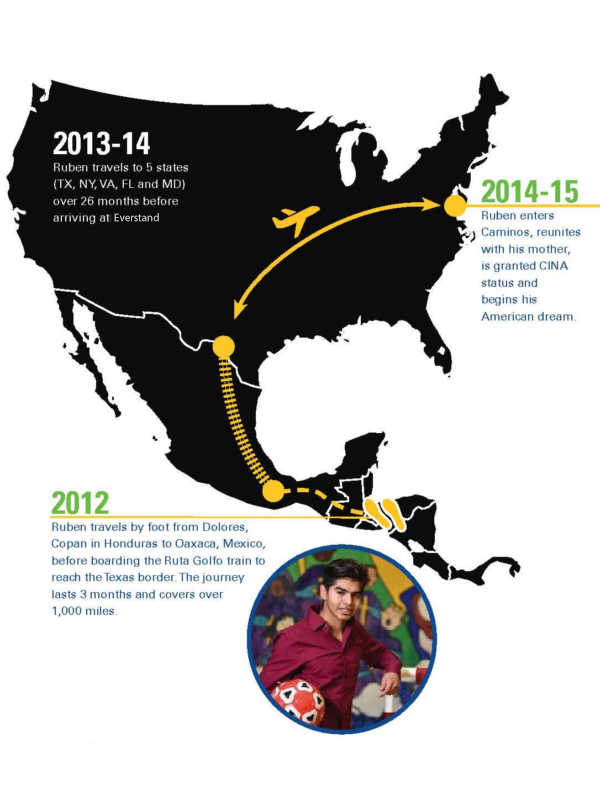
Hanging out with friends, listening to music, and playing sports – markers of typical teenage life – were things Ruben H. could only dream of in Honduras.
“It’s hard to make people understand what it’s like in Honduras, but I’m OK with telling it,” Ruben says. “I want to help people understand why I left.”
A Risk Worth Taking
Ruben escaped violent cartel drug trade, human exploitation and ransom kidnappings by walking from his village of Dolores in the Honduran state of Copán. He was just 14.
“Tell the truth and you’re in trouble,” Ruben says. “Because I saw people stealing things, other people wanted to kill me.”
Walking from Honduras, through Guatemala and into Mexico – a grueling trek of 800 miles by road or longer if by trail or field – Ruben and other migrants boarded the Ruta Golfo, a freight train running along Mexico’s Gulf Coast.
Filled with migrants sitting in cargo beds or atop boxcars with no protection from the elements, the trains are rife with criminals seeking victims for kidnapping ransoms.
“One night I huddled for warmth with a stranger so I didn’t die from the cold,” Ruben says. “If I was crying or feeling sad, I asked God to take care of me.”
On August 1, 2012, wearing nothing but the clothes he traveled over 1,000 miles in, Ruben waded across the Rio Grande River into the United States.
Touring America
Almost immediately, Immigration and Customs Enforcement (ICE) took Ruben into custody, kicking off a 26-month, five-state tour of residential foster care facilities. In October 2014, Ruben entered Caminos, Everstand’s program for recently migrated youth. Titled to honor the Spanish translation for “journey,” Caminos offered short-term shelter, medical care and case management support while youth awaited reunification with family or a sponsor.
Everstand’s challenge initially was paperwork – without citizenship papers or a birth certificate, Ruben could not apply for a visa – and because he wasn’t 18, he could not stay in the United States. Viviana Camacho, Ruben’s Everstand case manager, called the Honduran State Department several times a day for two weeks to unravel Ruben’s riddle.
Camacho had to get creative, too. “We drew a map, discovered Ruben’s hometown and ran an announcement on a local Honduran radio station,” Camacho says. “Someone heard it and told his mother. That was the break we needed.”
“That was maybe the best day of my life,” Ruben says of hearing his mother’s voice for the first time in three years. “My mother was so happy to hear me.”
Finally, Some Grace
Armed with his birth certificate and with help from a DC law firm, Capital Area Immigrants’ Rights (CAIR), Everstand helped Ruben qualify as a Child In Need of Assistance (CINA). That meant Ruben could stay in the United States instead of banishment back to Honduras when he turned 18.
Ruben embraced American culture. He played striker on his Baltimore County high school soccer team. He has made friends while taking hold of American culture. He learned to text in English, and has written close to 70 songs in Spanish.
Ruben believes his life has purpose thanks to Everstand. “In America, I’m not facing the danger I feared in Honduras,” Ruben says. “I’ve already done the hardest part. I’m at Everstand because I believe God wanted me to make a good decision.”
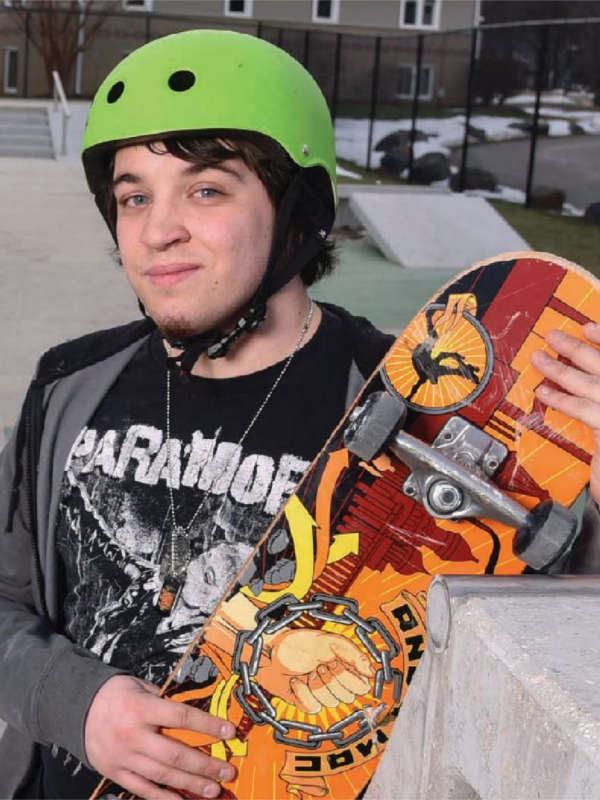
The way Ricky F. arrived at the Board of Child Care in 2007 will look nothing like how he will leave.
“We had stopped at McDonald’s for dinner and I was in the car with a cup of sweet tea held between my knees. We hit the speed bump by the front gate and the cup smashed and spilled all over my pants,” Ricky said with a smile. “I had to change in the bathroom right by the front desk.”
Nine years later, he prepares to leave BCC – with clean pants this time, he assures us – ready for living independently. “I was angry at leaving home and having to come live in a home,” Ricky recalls, “but I think a lot of maturity comes with age if you try to grasp it.”
SETBACKS TURN INTO COMEBACKS
“When I met him a year ago, school wasn’t working out the way he hoped and no one was calling him back for the various jobs he applied to,” says Grace Rudatsikira, Ricky’s clinical social worker at BCC. “(Then) everything seemed to align – there was a definite “click” moment.”
What clicked was Ricky’s ability to process what was going on around him. Instead of roller coasting through peaks and valleys, he steadied himself by controlling his emotions.
Now living in BCC’s Colesville, MD group home, Ricky is an accomplished skateboarder and snowboarder. He taught himself how to play guitar – first learning small riffs – before moving on to a few chords and eventually entire songs. His music has been a steady fixture at BCC campus gatherings, holiday parties, and Thanksgiving meals.
FONDEST MEMORIES
Ricky earned a scholarship to High Cascade Camp in Oregon, a week of learning from and interacting with professional snowboarders. “You’d be up 10,000 feet above sea level, the clouds would roll in and you couldn’t see 10 feet in front of your face,” Ricky says. “We’d go down the tail at 30 mph. Amazing.”
“I also still remember my first paycheck…it was $115.36. I bought a wireless router and an X-Box Live subscription,” Ricky says.
When asked what he is most proud of during his time at BCC, Ricky’s answer comes without hesitation. “Being there to cut the ribbon for the skateboard park on campus,” he says quickly. An avid skateboarder (and we must assume an excellent salesperson as well), Ricky’s advocacy for the construction of skateboard parks at the Baltimore and Martinsburg campuses pushed those projects to the finish line in 2014.
“Skateboarding was a huge part of my life when I was in Cottage Four and I figured a skate park would be a great way to get kids some activity, get them out of the way of cars,” Ricky says.
GIVING BACK
The young boy covered in sweet tea is now a young man who sees himself as a role model for younger residents. Helping them make the same small steps he once struggled with is what makes Ricky smile.
“Having someone to answer questions big and small means a lot,” Ricky says. “You’ll always have more chances to progress forward no matter what situation you’re in but what makes the biggest difference is what you do while you’re here.”
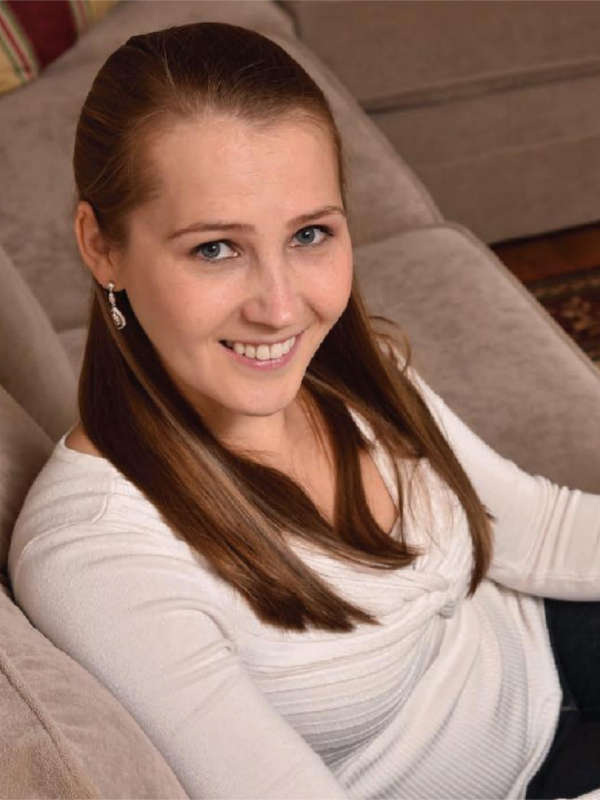
Maria H. can describe her experience at Baltimore’s Board of Child Care with just one word.
Hope.
BORN A SURVIVOR
To understand Maria’s journey, you first have to acknowledge her reality. After spending her first nine years with biological parents, she spent the next five years of her life in a large orphanage in Siberia. After her two sisters were adopted in 1998, a Maryland family from Baltimore County adopted Maria in 2001.
A survivor of a throwaway culture, however, her struggles would continue for some time. Maria spoke little English and, almost immediately, found difficulty adjusting to her new life with her adopted family. “I moved in with a foster care family temporarily. My adoptive parents wouldn’t take me back in, so I was transferred to foster care permanently and that’s how I arrived at BCC,” Maria said. “I was young, emotional, and not very happy,” Maria admits. “I was upset.”
ART BECAME AN OUTLET
Maria turned to art as an outlet to cope with her new reality. “I’m crafty; I like to make things,” said Maria, who continued to take classes at the nearby Staub art school in Catonsville, MD while living on the Baltimore campus.
“Art became a way to deal with my problems and emotions in a positive way,” she says. “It kept my mind busy. Instead of thinking about the sad things in my life, I turned my feelings to art and that made me feel good about myself.”
FOCUSED ON THE FUTURE
Realizing she had to finish high school if she wanted to succeed, earning her diploma became Maria’s main goal in her late teens. “An education meant that I would have a future, that it would lead me to be successful,” she says. “I didn’t know what I wanted to do after high school, but I knew I needed to finish.”
While completing high school, Maria took a job at Crown Trophy in Owings Mills. After graduation, she went to school to become a dental assistant through a program offered at Howard Community College. The license took six months to acquire; she started working in the field shortly after.
“Maria always knew what she needed to do, and she set her sights on being independent and following through on her goals,” says Nicole Smith, BCC’s Vice-President of Residential Services, who worked with Maria during her
time at BCC. “Once she had her skill set in place, we could all see she was going to flourish.”
LIFE TODAY
10 years have passed since Maria graduated from high school, moved away from BCC and launched her career
as a dental assistant. Now married, she is advancing her career through BCC’s alumni grant program, going back
to school to become a licensed dental hygienist. Perhaps most importantly, Maria looks forward to starting a family of her own one day.
“We don’t have kids yet, but we definitely want them,” Maria said. “We’re waiting for the right time to begin our family.”
The ability to circle a goal, chart a path to achieve it and execute the plan is something she credits Board of Child Care for teaching her, and she plans to fully utilize the skill.
“The program’s helped me to set goals when I needed them the most,” Maria said. “I wouldn’t have achieved this life without BCC.”
Kendra M. never received the childhood every little girl deserves until she came to the Board of Child Care.
Abandoned by her mother at two years old, Kendra’s father struggled with substance abuse. Often transient and sometimes homeless, it was not until Kendra was 11 when someone notified Child Protective Services. Neglect was confirmed; Kendra was placed into foster care.
Kendra was welcomed to BCC by a small army of support staff and responded very well to the program. With an individualized treatment plan in place, Kendra was able to work through her past trauma, make academic progress, and blossom through the healing relationships she experienced at BCC.
Kendra’s transformation led her to BCC’s community-based group homes in Martinsburg, WV. She became an honor roll student, a regular at spiritual worship, and advocated for herself and others at “The Landing,” a local teen recovery ministry.
After almost four years of many laughs — and a few tears, too — Kendra bid BCC farewell. Bittersweet because it meant saying goodbye to a recovery filled with good memories, but celebrated as she continues her march towards happiness and independence.
“A story like Kendra’s is the reason we do this work,” says Jacqueline Columbia, BCC’s Director of West Virginia Operations. “Helping change a child’s life positively not only impacts the child, but has a positive impact on an entire community.”
“Having one of our executives appointed by Governor Hogan to serve is an honor,” BCC President and CEO, Laurie Anne Spagnola, said. “It speaks to Nicole’s dedication and excellent credentials, as well as the reputation of the Board of Child Care as a residential provider.”
The CRCCP Board formed in response to a change in state law that occurred in October of 2015. All childcare professionals are now required to attain a state certification as care providers.
The problem? There was not a licensing body to oversee the professional standards and expectations.
The Board has a mix of private practitioners and representatives from other state agencies, such as the Department of Juvenile Services (DJS), the Department of Human Services (DHS), and the Developmental Disabilities Administration (DDA).
“I’m a direct care practitioner at heart and I believe we need to professionalize the tough work we do day in and day out,” Smith says. “The care for our kids is too important not to be regulated and this allows us to train and educate those who are advocating for and working with our most vulnerable populations.”
Per the new law, BCC staff who had attained enough years of experience could apply for grandfather status for the Residential Child and Youth Care Professional certification.
Instead, BCC elected to set the bar higher.
BCC required its 63 residential childcare staff and supervisors who qualified with grandfather status to complete the coursework anyway. All staff who did not qualify for grandfather status completed the coursework and sat for the state licensing test. BCC’s first time pass rate, well north of 90 percent, compared favorably against the 30 percent pass rate statewide.
“I hope BCC and the protocol we set for the newly-implemented law becomes the standard for other organizations to consider,” said Monte Ephraim, Director of Professional Development and Training. “I am so proud of the trainers we have and of our staff for meeting the challenge and passing their exams at such a high rate. Ultimately, however, it’s all about serving the youth at BCC, and I’m really proud of the best practice standard we are setting here.”
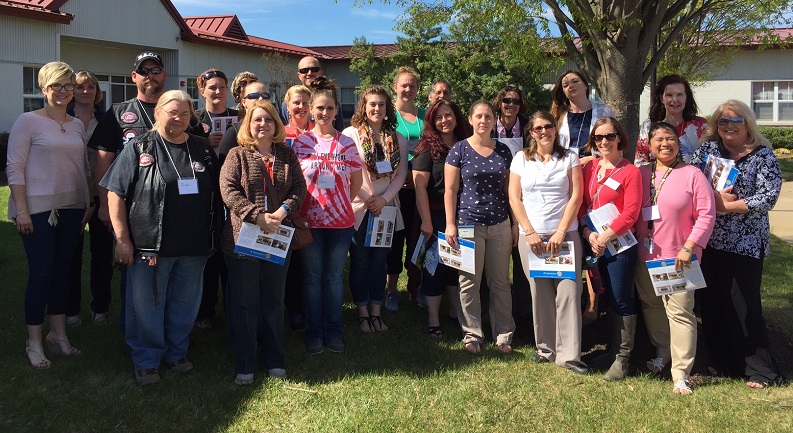
BCC’s Martinsburg residential campus hosted a Child Watch tour April 20 as part of a larger, collaborative effort to heighten community awareness of the plight of abused and neglected children.
“Because April is Child Abuse Awareness Month, we try to give adults an exclusive look at what a child sees while they go through the system,” said tour organizer Kristen Gingery, project assistant at the Family Resource Network. “This tour has been building for over 10 years and we were thrilled to have the Board of Child Care as a participant.”
The eight-destination bus tour included a stop at a hospital, where abuse or neglect is usually spotted or confirmed by a medical team. From there the group visited locations such as the Department of Health and Human Services in Martinsburg, a children’s shelter, a Safe Haven shelter, the Berkeley County Judicial Center and then as their last stop: the Board of Child Care.
Jackie Columbia, BCC’s director of operations in West Virginia, hosted the 21 participants for a campus tour and short talk about BCC’s residential programing.
“This type of experience is so important as we can show community members what we do, and who we’re advocating for,” Columbia said. “Seeing our actual facility and understanding what treatment looks like helps drive home our mission and the importance of BCC’s role within the community.”
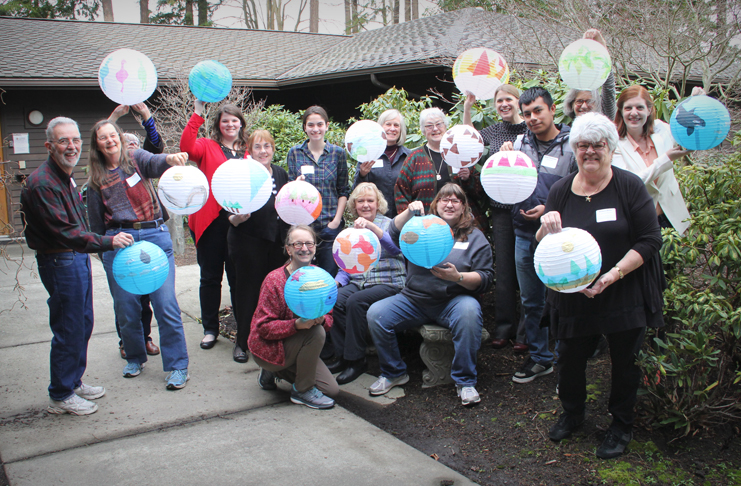
Lanterns like these will blessed and shipped to Africa following UMC’s general conference in Portland May 12.
Started in 1970, Earth Day has become a worldwide effort to give voice to emerging environmental issues.
Nationally, the Earth Day movement hopes to plant 7.8 billion trees and divest from fossil fuels and making large, urban cities more renewable.
At the Board of Child Care, program participants spent some time discussing the link between spirituality and social consciousness, and how that relates to events like Earth Day.United Methodist Church’s Baltimore-Washington Conference participated in, which ties in with the church’s.
Program participants in Baltimore and Martinsburg will construct and decorate lanterns lit by small LED lights. Each lantern will have a short message or prayer written on them.
The BCC Earth Day program ties into a larger effort being taken by the United Methodist Church nationwide. The UMC’s general conference – scheduled for May 12 in Oregon – includes a climate vigil. Lanterns made at BCC will be blessed alongside thousands of other lanterns made across the United States, and ultimately distributed overseas to those in need of light in their homes.
The lanterns – which will include a prayer card – are earmarked for communities in Africa, where in-home lighting is scarce and a lantern with even a small LED light can make a potentially huge impact.
“This is an important project because it teaches our kids about spirituality and social issues, and how both can be intertwined on a daily basis,” Rev. Dr. Stacey Nickerson said. “We can use events like this to make a difference in communities locally as well as abroad.”
For more information on how your church can participate, visit the news blog of the United Methodist Church’s Pacific Northwest region here.
When a family member or loved one passes, planting a tree in the deceased’s memory is an oft-mentioned option.
The Board of Child Care’s Volunteer Auxiliary has taken this a step further, with a “Tree of Life” in the Baltimore Campus Chapel. Maintained and funded by BCC’s Volunteer Auxiliary, the tree offers a family or a congregation an opportunity to change a young person’s life and remember a loved one at the same time.
Family and friends of Mrs. Margaret F. Lewis have done just that. Having served many years as the key person for McKendree-Simms-Brookland UMC in the Washington Region, Lewis was recently remembered with an engraved leaf.
Lewis, 83, passed June 4, 2014. She was born and raised in Chapel Hill, NC and enjoyed a successful 33-year career working for the federal government. She was known especially for her loving spirit that drew children close to her and her belief in promoting BCC’s mission in helping children.
(As the job fair has already occurred, positions we were interviewing for have been removed. Please click “Careers” at the top menu of this website to see all open job postings!)
Career Fair Open House
Tuesday, April 12, 2016
10:00 AM to 2:00 PM
Welcome Center on the Baltimore Campus
Board of Child Care
3300 Gaither Road, Baltimore, MD 21244 (map & directions)
Are you looking for:
Full time work (either salaried or hourly)?
A job with benefits such a health insurance, paid time off and sick leave, and matched retirement contributions?
A meaningful career where you can see the tangible results of your work and how it helps others?
An employer who invests in YOU with paid continuing education, tuition reimbursement program, and staff appreciation days?
Then join us on Tuesday, April 12, 2016 from 10:00am to 2:00pm!
Make sure you bring:
Plenty of copies of your resume
Driver’s Licence or other government issued photo ID (required for entry to campus)
All Board of Child Care locations require visitors and vendors to present a driver’s license or government issued photo identification upon arrival. State employees (DHHR, DJS, DSS, DHR, etc.), court employees, and police officers may show their state government ID in place of a driver’s license if they wish.
What to Expect:
Representatives from Human Resources and various Directors and hiring managers from the Baltimore program will be on hand to answer questions and interview selected candidates.
(As the job fair has already occurred, positions we were interviewing for have been removed. Please click “Careers” at the top menu of this website to see all open job postings!)
 Peter Walsh, a congregant at Glen Mar United Methodist Church in Ellicott City, first visited BCC on Martin Luther King Day this year as part of his church’s Day of Service project. Peter hadn’t decided yet what to do for his Eagle Scout project, but after learning more about the Baltimore program, the decision seemed clear.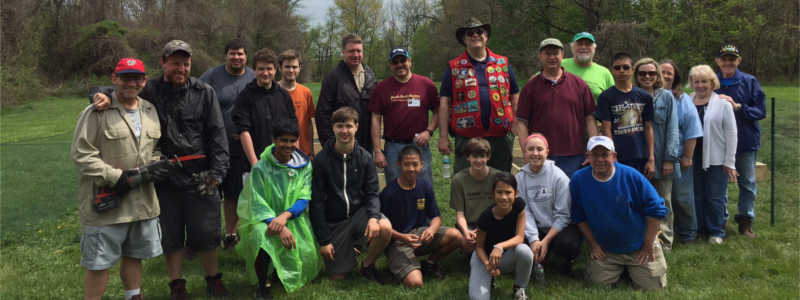
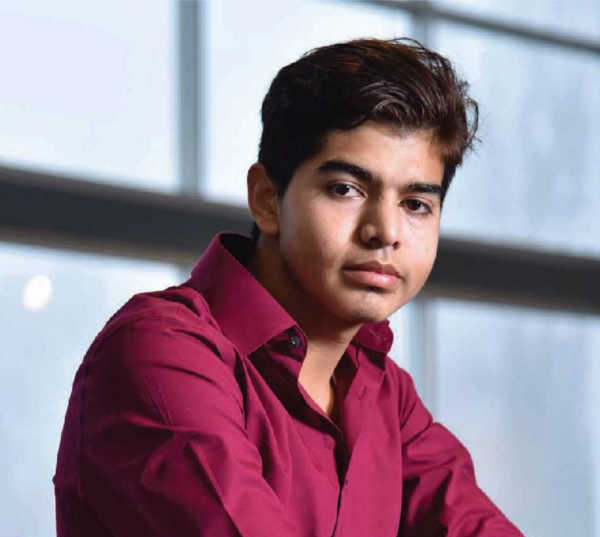
 The way Ricky F. arrived at the Board of Child Care in 2007 will look nothing like how he will leave.
 Maria H. can describe her experience at Baltimore’s Board of Child Care with just one word.
 Kendra M. never received the childhood every little girl deserves until she came to the Board of Child Care.