TFC preps for respite care on Maryland’s Eastern Shore

Year-long effort to offer service closer to reality with $25,000 grant

FCPKC logo PNGIt took a year of vision and the stress of writing a winning proposal, but the good news is here!
The Board of Child Care has received word the grant to expand its Treatment Foster Care (TFC) program to include respite care on Maryland’s Eastern Shore has been approved. The award comes from the Family and Community Partnership of Kent County Grant (FCPKC).

Board of Child Care’s TFC license with the state of Maryland includes a respite care license, making BCC eligible to apply for the grant. BCC’s response to the request for a proposal highlighted BCC’s assets already in place on the Eastern Shore, giving it the edge needed to win the grant.

Respite care affords a current TFC parent a break from the children they are stewarding. As any parent knows, getting a break from your kids, even for a few hours, can be a lifesaver. When it comes to TFC children who often have medical or behavioral issues, a break from the caregiving routine can mean the difference between a successful, stable foster home and foster parent burnout and placement disruption.

BCC will now provide respite care on the Eastern Shore without requiring kids to travel across the Chesapeake Bay Bridge to afford such a break. Allowing a foster care child to remain on the eastern shore even during this short break from their regular foster parents means they can stay connected with their school, friends, local family members, and normal activities.

“This partnership is about showing the Eastern Shore that the Board of Child Care is a high quality provider that will be an asset to the communities we serve,” said Karen McGee, Director of Eastern Shore Operations. “There’s a common culture of treating the Western Shore and Eastern Shore of Maryland as almost two different states. This expansion is an opportunity to break down that barrier and keep families together.”

TFC hosted a luncheon May 29 on BCC’s Eastern Shore campus (Denton, MD) to both celebrate the collaboration and convene a work group to discuss how recruited families would provide respite care within targeted counties on the Eastern Shore.

“We have an urgency to start recruiting families and individuals from Eastern Shore communities who desire to serve the children and families who need them most,” said Pat Wilson, BCC’s Director of Treatment Foster Care. “We know this all seems like short notice, but our urgency comes from our mission to prevent out-of-home placements and the breakup of families.”

Read more from TFC preps for respite care on Maryland’s Eastern Shore

Troop 509 rocks foster fair to benefit BCC

girl scouts group shotHoward County pack scores 25 blankets, 65 duffles for our youth

When most people think of the Girl Scouts, they think about cookies. So what do Girl Scouts think about? Thankfully, for their Bronze Star project, Girl Scout Troop 509 thought about the Board of Child Care!

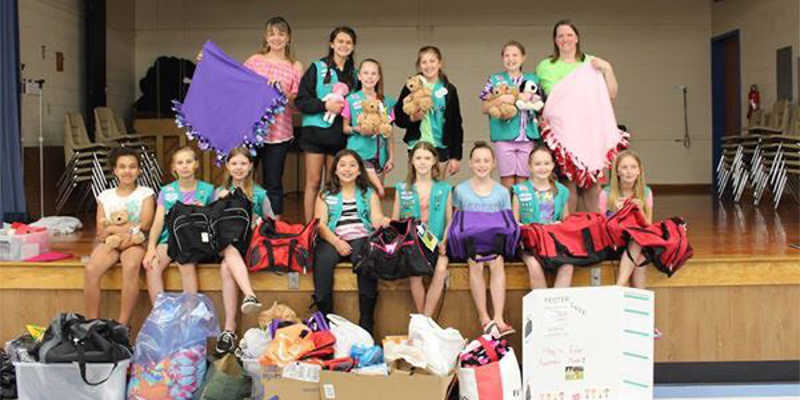
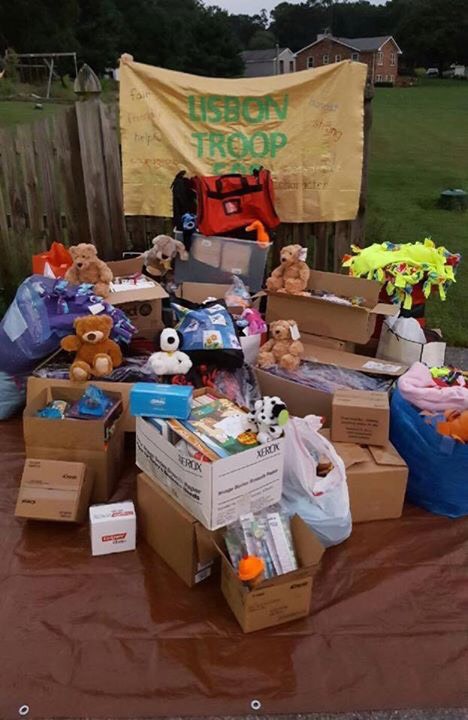
girl_scout_ginger_snap_by_ced75With a focus on the foster care community, Troop 509 organized a foster fair to raise awareness about foster care and to collect donations to benefit the children at BCC. During the event, Troop 509 collected over 65 duffle bags and over 25 blankets were created for BCC’s youth.
Jennifer Rankin, an attorney representing one of our youth at BCC’s Hagerstown group home with a daughter in Troop 509, and Libby Palumbo, a senior childcare worker, were instrumental in organizing the event. On the backend of the event, Rankin and Chad Bikle, Unit Supervisor for the Hagerstown Group Home, joined Palumbo to wrap up the donation process and make sure BCC received the items collected.

“Engaging with our communities is important, and this story highlights the kind of core values we’re seeking from our employees and stakeholders,” BCC President and CEO Laurie Anne Spagnola said.

The troop is from Howard County and is comprised of middle school-aged girls, or Cadets, in the language of Girl Scouts. The youngest girls begin as Daisies or Brownies and later graduate into Junior and Cadet programs. For high school girls, Senior and Ambassador programs are available.

Palumbo, a recent recipient of BCC’s Core Values Awardee for Impact, met with the young ladies prior to the event, educating them about BCC, the organization’s purpose, and the challenges BCC’s youth face.

“Being able to share with these young ladies the challenges our youth face was a privilege,” Palumbo said. “To see the outpouring from the community – in response to the effort these girls put forth – and be an ambassador for the Board of Child Care was nothing short of wonderful.”

Girl Scout donation 01

Read more from Troop 509 rocks foster fair to benefit BCC

Strawbridge School Fun Day : A Petting Zoo!

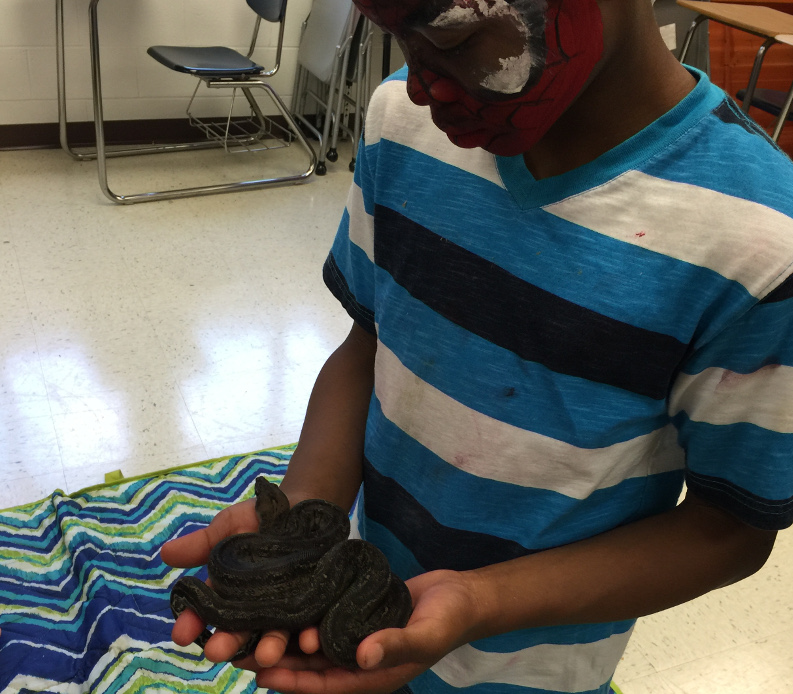
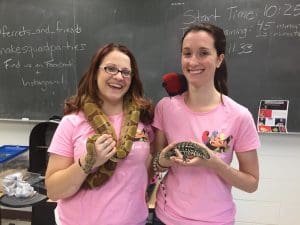
Provided by Ferrets and Friends, Kelly and Lina brought snakes, birds, reptiles, and ferrets to let the kids hold. The snakes were particularly popular with the boys. (go figure!)

IMG_1051

With 25 animal friends available for educational programs, most animals have been socialized since a young age and enjoy interacting with people, which makes for an engaging and interactive presentation.

IMG_1053StudentWithSnake


IMG_1057


Have you donated to support the students for the 2018 – 2019 school year?


Thank you so much for your contribution in support of our Back to School appeal! While we appreciate online contributions, if you are having any trouble using our online form you are also welcome to mail a check to:

Board of Child Care
Attn: Back to School
3300 Gaither Road
Baltimore, MD 21244

You may also call (410) 922-2100 x5430 to make a contribution over the phone during regular business hours.

Read more from Strawbridge School Fun Day : A Petting Zoo!

PRESS RELEASE: GRADUATIONS 2016

BOARD OF CHILD CARE CELEBRATES THE GRADUATIONS OF 20 STUDENTS AND PROGRAM PARTICIPANTS WITH 4 CEREMONIES SPANNING 3 CAMPUSES.

The following press releases were sent to local newsgathering partners and campuses June 27, 2016. Readers will find graduation information from Baltimore, Strawbridge School, Martinsburg, WV and Denton, MD.

2016 BCC Graduation Releases 2016-07-11

For any additional information, please contact Mr. Kristian Sekse, V.P of Communications, at 443-845-4395 (cell). Additionally, readers can email Board of Child Care’s Communications Dept. at communications@everstand.org.

About Board of Child Care

Enriching communities, one family at a time, BCC’s $27 million annual budget provides programs across the Mid-Atlantic. Offerings include residential care, treatment foster care, early childhood education, therapeutic counseling, adoption information and referral, and a special education school. Headquartered in Baltimore, BCC operates facilities and group homes throughout Maryland and the Eastern Shore, West Virginia, and the District of Columbia.

To learn more, visit www.boardofchildcare.org.

Read more from PRESS RELEASE: GRADUATIONS 2016

PRESS RELEASE: ELP PROGRAM IN D.C. EARNS NAEYC ACCREDITATION

FOR IMMEDIATE RELEASE
Contact: Kristian Sekse
443-845-4395 (C)
ksekse@everstand.org

WASHINGTON, D.C. – June 27, 2016 — The Board of Child Care’s Early Learning Program, located in the Southeast (SE) quadrant of Washington, D.C., has earned accreditation from the National Association for the Education of Young Children (NAEYC) – the nation’s leading organization of early childhood centers.

This approval follows the Board of Child Care’s certification in February from the Commission on Accreditation of Rehabilitation Facilities (CARF) and last month’s license for the West Virginia campus in Martinsburg to offer Functional Family Therapy (FFT).

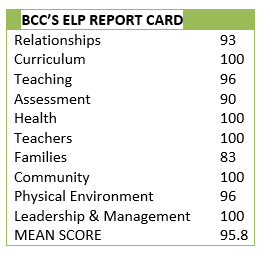
BCC REPORT CARD W MEAN SCORE NAEYCBCC earned outstanding scores within the 10 NAEYC program standards the ELP was judged and evaluated upon. NAEYC awarded BCC 100 percent marks in five categories, 96 percent or better in two other standards, giving BCC a mean score of 95.8!

“NAEYC is the gold standard and recognized nationally for quality early learning programs like ours,” said Cora Jackson, Assistant Program Director of the DC ELP. “It says that our program is a place where all children can learn, grow and thrive, because of our exciting and rich learning environments, nurturing, engaging, and knowledgeable teaching staff, and committed families.”

The NAEYC certificate, conferred June 6, 2016, is valid through July 1, 2021. The certificate is based upon evaluated proficiency in 10 program standards, each group or classroom observed during a site visit, as well as all candidacy and other required criteria. The required criteria include scoring 80 percent or better for each program standard and 70 percent or better for each classroom or group observed.

“What these numbers tell me is we’re very successful at what we do and justifies why we have a waiting list to get into the program in DC,” said Laurie Anne Spagnola, BCC’s President and CEO. “It also means we have some outstanding programming in place to enrich the children and families we serve, and that is most important.”

To earn NAEYC accreditation, the Board of Child Care went through an extensive self-study process, measuring the program and its services against 10 NAEYC Early Childhood Program Standards and more than 400 related accreditation criteria. Additionally, NAEYC assessors conducted an on-site visit. NAEYC-accredited programs are also subject to unannounced visits during their five-year accreditation.

In the 25 years since NAEYC Accreditation was established, it has become a widely recognized sign of high quality early childhood education. NAEYC validates 7,000 programs, or just approximately eight percent of all preschools and other early childhood programs.

About the Board of Child Care

Enriching communities, one family at a time, BCC’s $27 million annual budget provides programs across the Mid-Atlantic. Offerings include residential care, treatment foster care, early childhood education, therapeutic counseling, adoption information and referral, and a special education school. Headquartered in Baltimore, BCC operates facilities and group homes throughout Maryland and the Eastern Shore, WV and D.C.

To learn more, visit www.boardofchildcare.org.

###END###

Download a PDF of this news release

Read more from PRESS RELEASE: ELP PROGRAM IN D.C. EARNS NAEYC ACCREDITATION

Mathis posthumously receives MANSEF award June 6

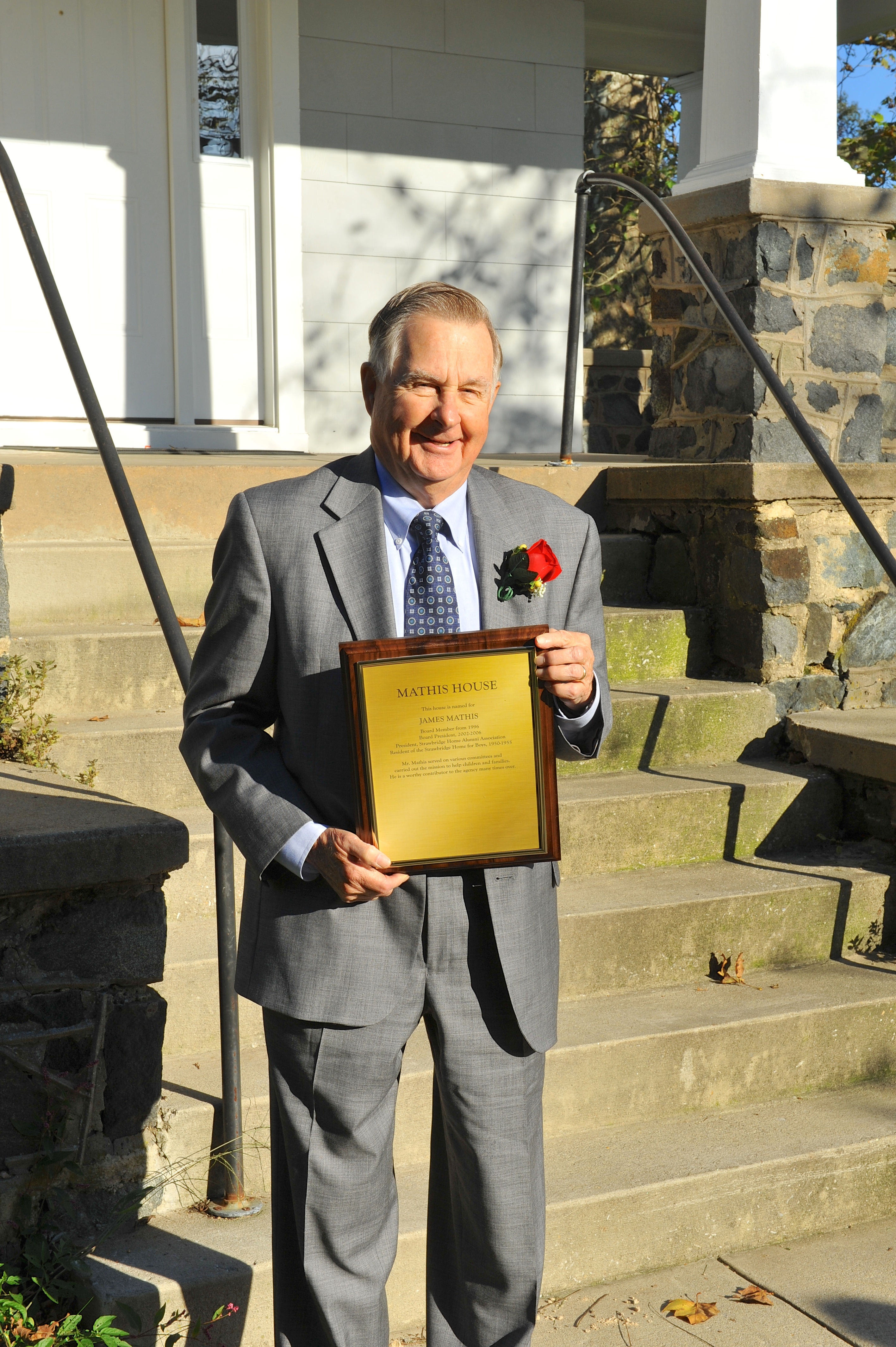
DSC_6080Jim Mathis, who served on the Board of Directors for the Board of Child Care for 19 years, will be honored June 6 with the 2016 Distinguished Citizen Award from the Maryland Association of Nonpublic Special Education Facilities (MANSEF).

Mathis died July 15, 2015 at age 78 and grew up in the Strawbridge home in Eldersburg, MD. His widow, Lois Mathis will accept the award on his behalf. Two of Mathis’s brothers and his daughter, Amy, plan to attend the ceremony.

Mathis was profiled May 24 in the Carroll County Times by reporter Jon Kelvey. Read the entire article here. Mathis was featured on Page 19 of the Board of Child Care’s 2015 Annual Report, which is available for download here.

Described as “the ultimate advocate and volunteer for BCC during his lifetime,” in that 2015 annual report, Mathis led several committees and served a term as chairman, and was the driving force behind the Strawbridge alumni program.

A residential cottage was named in Mathis’s honor in 2012 and the Jim and Lois Mathis Award For Service and Community Scholarship is given annually to a current program participant.

Mathis believed in education above all else and would often visit the campus and encourage BCC’s children to persevere and to seek a diploma despite the difficulties they experience, his own life serving as a sterling example. He gifted plenty of financial resources to BCC over the years, none greater than a kind and gentle spirit to all he encountered, especially the children who are part of the Strawbridge School, the namesake of his childhood home with BCC.

Mathis was a regular at events or graduations, reminding all of us that commitment to our children sends a clear message of love and respect.

MANSEF is a professional association of publicly-funded private schools. The Distinguished Citizen Award is given annually and has traditionally recognized a board member, stakeholder or volunteer at one of the member schools within the association who has demonstrated a willingness to exceed expectations in fulfilling the mission of the organization he or she represents.

Read more from Mathis posthumously receives MANSEF award June 6

Saying YESS to better participant outcomes

New programming initiative is another move towards evidence-based success

With a long-term goal of saying yes to more consistent, positive outcomes, the Board of Child Care’s Baltimore and Denton campuses have embarked upon the YESS programming platform.

YESS stands for Youth Engagement Success System. The core components of the YESS platform are Respectful, Responsible, Safe and Self. The program teaches good decision-making skills, deters negative behaviors and pushes program participants to work toward unity and personal goals through choice-making challenges.

The four core components are broken down around how they relate to treatment, the community, education and workplaces, and family support systems. BCC staff, who embody the acronym for the role model, engagement, professional and safety (REPS), administer the YESS system. The REPS are responsibilities for teaching, addressing, correcting and reinforcing positive behavior with residents.

Residents in the program receive privileges related to a given category, and there are certain things a youth can have based on where they are in the program. As choices are made by residents as to what they are to participate in on the unit, there are rewards or consequences for some choices, and these are based on what a natural consequence would be in life for certain behaviors.

Rewards outstrip consequences, but for a certain category of offenses, REPS have a pool of consequences at their disposal created from logical, natural outcomes. In rare cases, enacting an extended safety plan beyond the pool of consequences is available when safety demands it.

By being able to choose how involved they want to be in the program, the residents can control their outcomes on a micro level, leading to more control on a macro level, too. BCC will collect data over the next year to chart outcomes for participants engaging in the YESS Program.


Read more from Saying YESS to better participant outcomes

BCC Spotlight: ALEXANDRA GLOVER, LGSW and Care Team Coordinator

Alexandra Glover
Alexandra Glover

Glover earned an April promotion to Care Team Coordinator, where she will assist with integration and implementation of programming on Baltimore’s upper campus. Known at BCC as Alex, she’s a 2009 graduate of the University of Kentucky — Go Cats! — and secured her master’s degree in Social Work from the University of Maryland in 2014.

Q: Before you became a social worker, you were an on-call childcare worker and later interned with our Treatment Foster Care team while you attended graduate school. What was your perspective those first few months – how has it changed? – and how did those challenges prepare you for your present caseload and responsibilities?

A: I went from a person focused solely on doing one job to dispersing my energy into many areas at once. The challenge was to find the balance in juggling work, school, and the internship while ensuring the multitasking would not affect my work and relationships built with my youth. I had many ‘aha moments’ in those first few months of grad school and still have them. It is all part of being a social worker … You need some grit in this field, because it’s not for everyone, but it is for me.

Those challenges and experiences have aided me many times when I had a demanding week and was not sure where to start. Prioritizing tasks and figuring out what is important is how you win the day.

Q: Your second graduate school internship was with Johns Hopkins Hospital, but you choose a full-time offer from BCC over Hopkins after graduation. What made BCC your top pick?

A: I was fortunate to have to decide between BCC and Hopkins, but the decision was not difficult. I had fallen in love with residential treatment and felt like BCC was already my home. I like being in a setting where social work and mental health were the top priorities, whereas in the hospital medical needs were understandably put first. I also wanted to work in a position where I could build long-term therapeutic and working relationships with clients, families, and agencies.

Q: Can you talk about how your progression from childcare worker four years ago to intern to social worker to coordinator helps shape the therapeutic strategies you employ in your new position?

A: We speak of our participants from a programming or clinical standpoint, and I am blessed with some background in both, so my progression shapes strategies daily. Residential care is constantly evolving; the challenges I faced as a childcare worker are different today, but I know both perspectives.

I am excited about my new position because it is completely in line with BCC’s new mission. This is a way to bridge BCC’s work from a clinical and programming standpoint from a time where we were separate to being truly integrated.

Q: You said the diverse team that supports the kids we serve is vitally important to achieving successful outcomes. What makes this so?

A: We are tasked with designing and executing a program that completely wraps care around an individual. This means the more obvious categories like education, physical health, and providing housing.

It also includes the intangibles such as teaching life skills, coaching them how to be their own advocates in treatment meetings, and just generally supporting them through breakups, crushes, tough teachers, and everything else that comes with being a teenager. That is the best way I can describe how BCC becomes their nonconventional family.
Each member of the care team is working on one, if not multiple goals in those categories I just mentioned.

We must all learn from one another, and from the youth directly, what is working and what isn’t. That’s where the communication piece is so critical and having a diverse team so important. One person may think to try something a different way and that becomes the breakthrough moment that really resonates with youth.

Q: Kentucky and Maryland are two universities with proud basketball heritages, and your brothers attended the University of North Carolina. March Madness must be intense, right?

A: Yes, quite intense! We grew up watching and rooting for Maryland – and still do! – but our primary loyalties are with Kentucky and UNC now.

I decided I’d take it easy on my parents and made them a blanket they keep on the couch with one side UNC and one side Kentucky. My mom just flips it over dependent on the game they are watching at the time. I also gave them two attractive yard gnomes as a present one year that they now proudly keep in our nice living room. We rub their heads for good luck on big game days!

All serious fans have their rituals, right? Needless to say, it’s not bad being a basketball fan as a member of our family – most years we’re going to have at least one serious contender!

Know of someone worth spotlighting at BCC? Email that recommendation to communications@everstand.org.

Read more from BCC Spotlight: ALEXANDRA GLOVER, LGSW and Care Team Coordinator

The 2015 Annual Report is Here!

Three heartfelt profiles, a financial snapshot and breakout spread highlight publication

2015 Annual Report Cover
Click the image to download the full report

It took months of planning and effort, but the Annual Report is finished!

Even though the report will soon be available in all of our campuses, an electronic PDF is available on our website. The first copies of the report mail out next week. There’s a remittance envelope stitched in every mailed copy, which can easily be torn out and returned with your donation.

At 20 pages cover to cover, the report highlights BCC’s accomplishments in the 2014-15 fiscal year (July 1, 2014 to June 30, 2015).

We are incredibly proud of our outcomes this past year! Did you know we served 836 youth in total last year and our employees engaged in almost 16,000 hours of continuing education or training?

The statistics are brought to life by three program participant profiles: two active and one alum.

Our first profile, Ruben H., details his incredible strides towards independence after his breathtaking journey to Baltimore from Honduras. You’ll meet Ricky F., who remembers the not-so-sweet start he had at BCC but now looks in the mirror and says he’s a better person because of the team he’s worked with here. And finally, there’s Maria H., who graduated from our residential program years ago but recently received a continuing education grant from BCC to further her career and support her family.

These are stories worth reading – and if they move you like they moved us – we hope you’ll consider donating. BCC’s high level of professionalism and care, as well as our ability to do more each year comes from the support of donors like you.

Read more from The 2015 Annual Report is Here!

TFC trains to face the challenge

Duke University Medical Center brings new evidence-based practices to Baltimore

Citing the need to push towards even better outcomes, Treatment Foster Care Director, Pat Wilson, enlisted a comprehensive, three-day training with Duke University Medical Center.

Wilson is looking to add greater competence and confidence for her entire staff, the training took place during the last week of April on the Baltimore campus.

The training – titled Together Facing the Challenge – teaches a high-rate of evidence-based positive outcomes and a cost-effective implementation schedule. The training included techniques for in-home interventions, building therapeutic relationships, teaching cooperation skills, and implementing more effective parenting techniques. BCC receives a year’s worth of consultation from the Duke to ensure proper implementation of the training.

“As an organization, BCC is responsible for specific deliverables as a child placement agency on behalf of the state of Maryland, and this training reflects changes in evidence-based treatment that can help us deliver the positive outcomes our stakeholders expect,” Wilson said.

“I learned some specific and creative parenting techniques I can share with parents on my caseload to improve outcomes, which is the ultimate goal of all our efforts,” says social worker Danyelle Crawford, who earned BCC’s Core Value Award for Empathy in January. “The training gave me the confidence to work with my peers and counsel the parents and children we serve to conquer any challenges we encounter together.”

Brooks Certificate 4.27.16

Treatment Foster Care parent Steven Brooks celebrate certification with Duke University’s Maureen Murray (LCSW) and Don Bartosik.

Read more from TFC trains to face the challenge